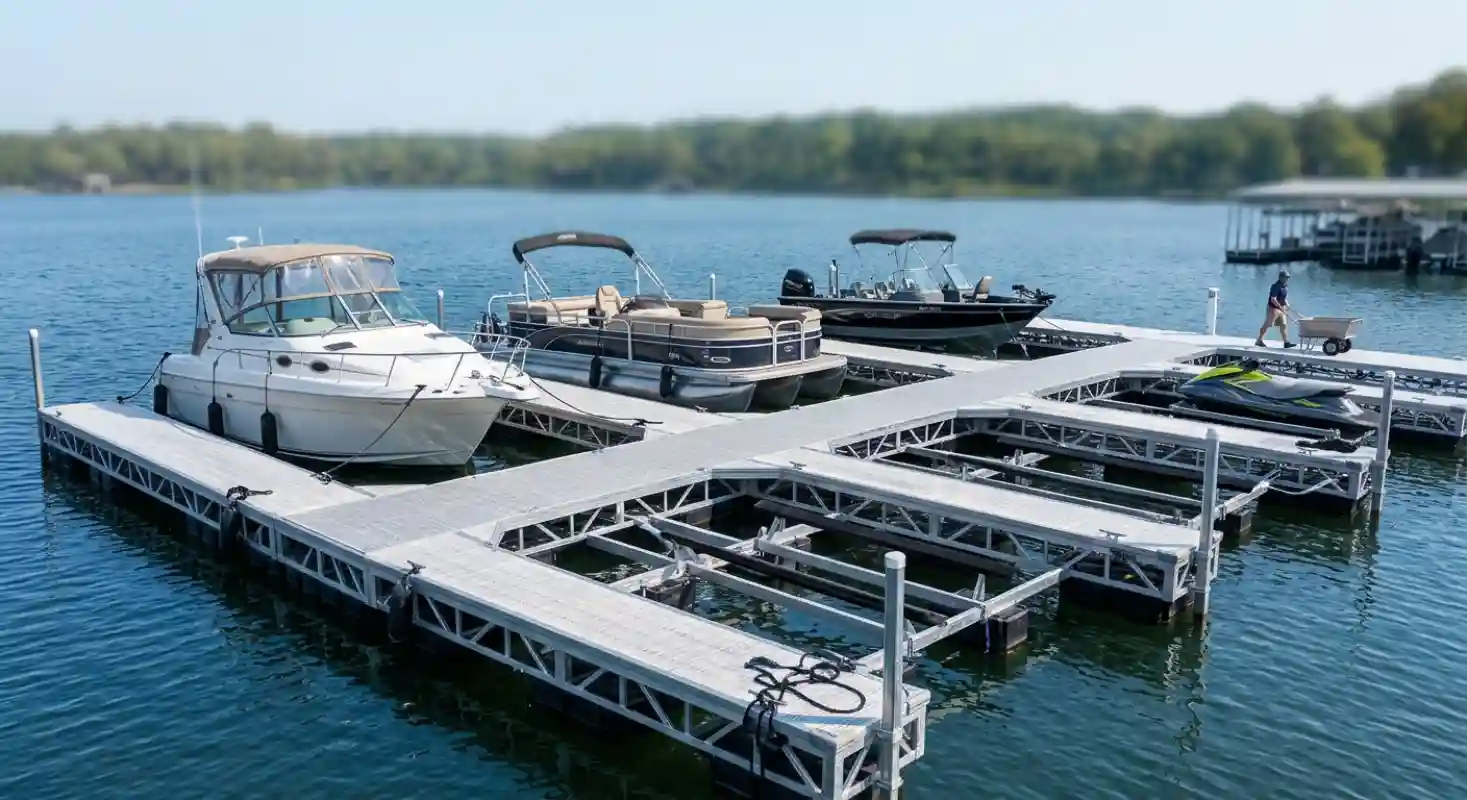
A boat dock might feel solid with two people standing on it, but that can change when several passengers gather near the edge or heavy equipment gets added. Uneven weight puts extra pressure on certain parts of the structure, sometimes causing movement, bending, or damage that develops over time. Proper load distribution helps prevent these problems by making sure the dock’s frame, flotation, and supporting components work together to carry the expected weight safely.
How Weight Moves Through a Dock’s Frame
Dock frames do more than hold decking in place. They transfer weight from the walking surface through crossmembers, beams, and supporting connections. Engineers design these components to share loads without allowing individual sections to bend beyond acceptable limits. A poorly arranged frame may concentrate pressure around joints or unsupported areas, increasing the risk of fatigue damage.
Aluminum boat docks use structural members designed to provide strength without excessive weight. However, aluminum’s relatively light weight does not automatically guarantee stability or sufficient load capacity. Beam dimensions, spacing, alloy strength, and connection design determine how much weight the system can handle.
Concentrated loads deserve particular attention because they place considerable force on a small area. Heavy storage boxes, boat lifts, and large groups of people can create pressure that ordinary walking traffic does not. Builders must account for these loads during design rather than assuming the dock’s total rated capacity covers every possible arrangement.
Why Can an Uneven Load Make a Floating Dock Tilt?
Floating docks rely on buoyancy to support their weight. Each flotation unit displaces water, producing an upward force that helps keep the structure afloat. Problems begin when weight shifts toward one side faster than the flotation arrangement can compensate.
For example, passengers gathering along the edge of an aluminum floating dock can cause that side to settle deeper into the water. A properly designed system maintains enough stability and freeboard to accommodate expected movement without creating unsafe conditions.
Flotation placement plays a major role in controlling that movement. Units spread across the dock’s width generally provide better resistance to tilting than flotation concentrated near the center. Experienced floating dock builders also consider the dock’s center of gravity, expected passenger loads, and whether heavy accessories will remain permanently installed.
The Hidden Stress Around Connections and Support Points
A dock can appear level while its structural connections carry unequal forces. Repeated pressure around bolts, welded joints, and mounting brackets may cause fatigue damage, especially where waves continually move the structure. Small cracks or loosened connections can eventually affect the surrounding frame if nobody addresses them.
Load transfer becomes particularly important where walkways connect to floating platforms. These areas experience changing forces as the dock rises, falls, and moves with passing waves. Hinges and connection hardware must accommodate that movement without placing excessive stress on nearby structural members.
Buyers comparing aluminum docks for sale should look beyond decking thickness and overall dimensions. Connection quality, structural support, and attachment details often reveal more about a dock’s ability to handle repeated loading than its outward appearance.
Why Dock Layout Matters as Much as Structural Strength
The arrangement of boat slips, walkways, and recreational spaces affects where weight accumulates throughout the day. A narrow walkway serving multiple boats may experience concentrated foot traffic, while a covered seating area adds permanent weight from furniture, roofing, and other equipment.
Dock designers must also distinguish between permanent loads and temporary loads. Permanent loads include the structure itself and attached features, while temporary loads come from people, movable equipment, and changing activities. Wind and wave forces create additional demands that require separate consideration.
Property owners researching aluminum boat docks for sale should discuss how they intend to use each section. A dock designed for occasional fishing may need changes before supporting a large gathering area or additional equipment. Proper planning helps prevent costly modifications after installation.
Matching Load Capacity to Everyday Waterfront Use
Safe dock performance depends on knowing both the total load capacity and how that weight can be distributed. A rated capacity does not mean owners can place the entire allowable weight in one corner. Localized limits may apply to decking panels, walkways, and individual structural sections.
Manufacturers of aluminum docks should provide clear information about intended uses and applicable load restrictions. Owners also need to avoid adding heavy accessories without confirming that the frame and flotation system can support them.
For waterfront projects that require careful planning around weight, layout, and changing water conditions, Flotation Systems offers custom aluminum floating dock configurations for different boating and recreational needs. Its available designs allow property owners to consider platform arrangements, flotation systems, and dock features before selecting a structure. Discussing expected loads and intended activities during the design process can help establish a dock layout that remains practical and properly supported throughout regular use.