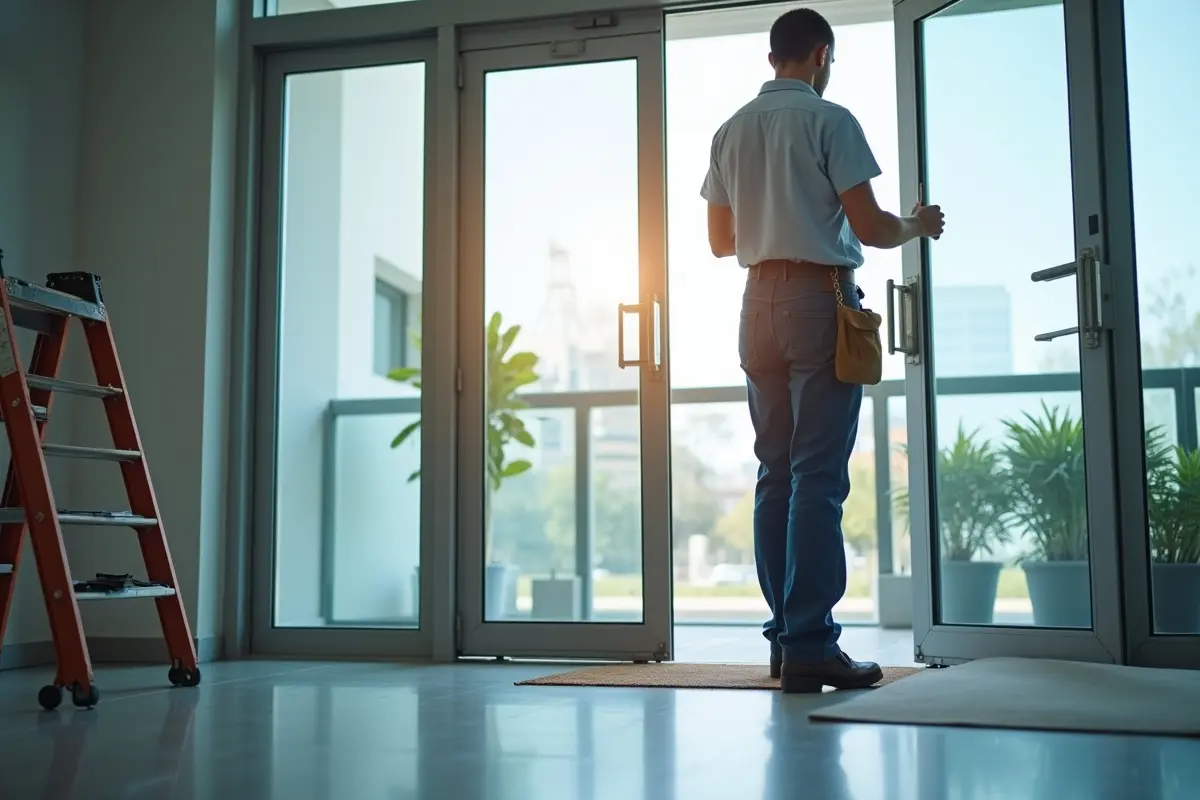
A finished glass door can look acceptable at first glance and still hide installation problems that show up later. Good commercial door glass replacement depends on careful fit, steady support, clean sealing, and door movement that remains smooth after the new panel goes in. Poor work usually leaves clues around the glazing edges, frame, seals, or hardware long before the glass fails again.
Clean Glazing Beads vs. Chipped or Poorly Seated Stops
Glazing beads and stops help secure the panel inside the door frame, so their condition matters more than many people realize. Quality work leaves these pieces seated evenly against the glass without bent corners, chipped edges, loose sections, or visible gaps. A clean fit also helps the door look finished rather than repaired in a hurry.
Damaged stops can create more than a cosmetic issue. Pieces that sit unevenly may fail to hold the glass consistently, allowing slight movement each time the door opens or closes. That movement can stress the panel over time, especially around corners where glass tends to be more sensitive.
Careful commercial glass replacement includes checking whether existing beads can be reused safely or should be replaced. Installers who force worn components back into place may save time during the job but create weak contact points that shorten the life of the new glazing.
Uniform Sealant Joints vs. Gaps That Allow Water Infiltration
Sealant around commercial door glass should form a consistent joint rather than a series of thick patches and thin spots. Proper application helps keep rain and outside air from reaching areas behind the glazing system while still allowing limited movement between materials.
Gaps become especially noticeable during wind-driven rain because water can follow small openings into the frame. Once moisture gets behind the glazing, it may collect near rails, fasteners, or interior finishes where the source is harder to identify. Uneven sealant can also pull away early if the surface was dirty or poorly prepared.
Professional commercial door glass replacement involves removing loose residue and preparing the contact area before fresh sealant is applied. Businesses searching for commercial glass replacement near me should expect the finished joint to look continuous and properly bonded rather than simply covered with excess caulk.
Proper Edge Clearance vs. Glass Binding Against the Frame
Glass should never be wedged tightly against metal or another hard surface. Quality installation leaves controlled space around the edges so the panel can handle small changes in temperature and normal door movement without being pinched by the frame.
Binding creates a hidden source of stress. Metal expands and contracts with heat, and doors flex slightly during daily operation. If the pane has no clearance, those forces may transfer directly into the glass edge and eventually cause cracks that seem to appear without an obvious impact.
Accurate measuring prevents this problem before fabrication begins. A skilled installer accounts for the visible opening, hidden glazing pocket, glass thickness, setting materials, and required spacing so the finished panel sits securely without being forced into place.
Stable Panel Support vs. Uneven Load on the Glass Edges
Commercial door glass needs support at specific points rather than random contact around the perimeter. Setting blocks and related components help carry the panel’s weight and keep it centered inside the frame. Proper positioning reduces the chance of the glass settling onto a corner or pressing against hardware.
Uneven support may cause the pane to shift slowly after installation. Doors experience repeated vibration and movement throughout the day, so even a small alignment problem can become more noticeable over time. A panel that starts rubbing the frame or dropping out of position may have been poorly supported from the beginning.
High-quality commercial glass replacement includes checking how load travels through the door assembly. Technicians look at the frame, rails, blocks, stops, and surrounding hardware so the new glass remains stable rather than relying on sealant alone to hold everything in place.
Smooth Door Operation vs. Glazing That Causes Frame Distortion
A properly replaced panel should not make the door harder to open, close, or latch. Quality work preserves the original operating clearance and keeps the frame from twisting under pressure. After installation, the door should move freely without scraping, dragging, or requiring extra force.
Frame distortion can happen when glass is oversized, installed under pressure, or combined with poorly aligned hardware. Hinges, pivots, closers, handles, and rails all affect how the entrance carries weight. If the glazing changes those relationships, the door may sag or stop lining up correctly with the strike.
North Alabama Glass helps commercial properties address broken entry glazing with commercial door glass replacement that accounts for fit, sealing, support, and hardware alignment. Their team can inspect the existing door system and determine whether the damaged panel can be replaced cleanly without creating the kinds of installation problems that often lead to repeat repairs.